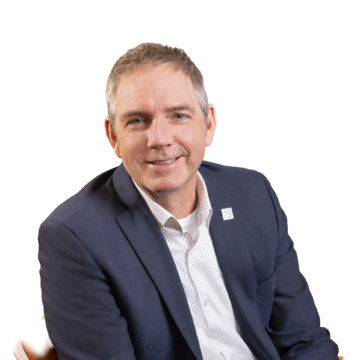

By: KABOOM! based on a conversation with Jim Boyle, Vice President of Programs and Strategy, Ralph C. Wilson, Jr. Foundation
The Problem Hiding in Plain Sight
Somewhere along the way, American communities made a quiet decision: play is optional. It gets cut from school budgets. It gets designed out of neighborhoods as land values rise. It gets framed as a leisure activity, nice when resources allow, expendable when they don’t. The consequences of that decision are now undeniable. One in five children and adolescents experience a mental health condition. Rates of anxiety, depression, and social isolation among young people have climbed for more than a decade. And children in low-income communities, who were already navigating more with less, are bearing the heaviest share of that burden.
Jim Boyle has spent nearly a decade at the Ralph C. Wilson, Jr. Foundation watching communities grapple with this reality and investing in a different vision. His conclusion is direct: “Play is not a nice-to-have. It’s essential. And we know why it matters.”
What Infrastructure Actually Means
We don’t debate whether roads are infrastructure. We don’t ask communities to make the economic case for clean water. But play (physical activity, outdoor recreation, and the simple freedom to move) is treated as a luxury, something communities earn once serious investments are made. The Ralph C. Wilson, Jr. Foundation’s Built to Play initiative is a direct challenge to that logic. Over $16 million. More than 100 innovative play spaces across Southeast Michigan and Western New York. A partnership model built on co-design, community voice, and the conviction that great design is not a reward for wealthy zip codes.
“The CDC recommends 60 minutes of physical activity a day for children,” Boyle notes. “Kids who are physically active are more likely to be healthy adults and more likely to thrive academically. You can make an economic case, but ultimately, it’s a moral imperative. Something as simple as this should not be this hard: the freedom, without worry, for parents and kids to just go play and be.”
That framing captures something important. When a family cannot let their child play freely outdoors, when the radius of safe movement shrinks because of disinvestment, neglect, or the accumulated weight of decisions made without them, that is not a parenting problem. It is a policy failure. It is an infrastructure failure. Boyle raised his children on Detroit’s east side and often witnessed other parents draw tight boundaries around where their children could go. Those boundaries weren’t overprotection. They were a rational response to systemic abandonment. And the children living within those boundaries are often carrying the weight of society that no child should have to carry.
“Kids are thinking about heavy things,” he said, “before they have to.”
That cost, the early theft of a carefree childhood, shows up in mental health data, in doctors’ offices, in schools. And it is entirely preventable.
Community Voice is Not a Step in the Process. It is the Process
One of the Foundation’s most important lessons from a decade of investment is deceptively simple: communities know what they need. In Salamanca, New York, a small rural community in Seneca Nation territory, Built to Play didn’t just construct a play space. It convened multigenerational design conversations. It listened to teenagers. It invested in what the community said it wanted. The result was off-the-charts engagement, not because the Foundation had the right answers, but because it asked the right questions and then got out of the way.
“The community has to guide us,” Boyle says. “We aren’t that big. We don’t know everything. And when you build from assets, when you take your cues from the people on the ground, what you build is stickier, more resilient, more theirs. When we’re gone, what outlasts us is what their community built.”
This is the animating philosophy behind KABOOM!’s partnership with the Foundation, and it is what the State of Our Kids Report asks of every funder, system, and civic leader reading these pages: stop designing for communities. Start building with them.
What it Will Take
Boyle’s vision for 2035, the year the Foundation concludes its spend-down, is not modest. He wants more children moving their bodies through sports or free play. He wants a culture that supports that goal regardless of zip code or ability. And he wants the cross-sector infrastructure to make it sustainable: municipal investment, inclusive policy conversations, elevated funding streams, and the kind of embedded community design that makes play a permanent feature of how we build cities and towns, not an afterthought.
“It should be embedded in your community design,” he says. “In economic development, you see master planning that doesn’t integrate play at all. You don’t need to look at this from a play lens. Look at it from a community design lens. A public space lens. An environmental lens. Be intentional.”
That intentionality is exactly what the State of Our Kids Report calls for. Children are not asking for anything extraordinary. They are asking for what every child deserves: safe places to move, to connect, to simply be kids, without worry, without barriers, without having to wait for systems to decide their neighborhood is worth investing in. Play is infrastructure. And it is urgent that we build it that way.