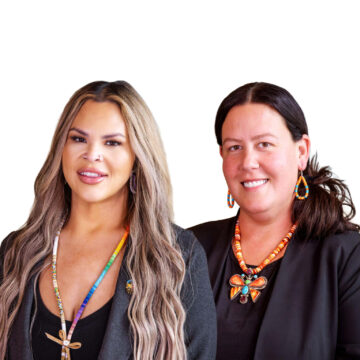

By SMSC Vice-Chairwoman Natasha Hacker and SMSC Secretary & Treasurer, Ashley Cornforth, co-chairs of IndigeFit Kids
How tough it is to be a kid growing up today.
We grown-ups all navigated those awkward years: physical and emotional changes, the search for identity, and the long, uneven passage to adulthood. But the challenges we, our parents, our grandparents, and our ancestors faced seem almost manageable compared to what children today confront: easy access to unhealthy food; relentless technology and nonstop digital distraction; rising anxiety, isolation, and cyberbullying; unhealthy coping habits; and a growing loss of respect for self, elders, and one another.
The evidence is clear in the general statistics on youth: physical activity is declining, mental and emotional problems are increasing, and overall wellness is worsening.
Now imagine you are a child in an Indian Country.
Your family has known, and may still know, great poverty. Your community had its spirituality, language, foodways, and culture suppressed by government and broader society. Your people were displaced from ancestral lands or concentrated onto a fraction of them. Your access to a good diet, quality schools, health care, and playspaces is likely worse than that of any other demographic group in the United States. And your identity is almost certainly ignored, misunderstood, or ridiculed.
Simply put, Native American children face the most difficult conditions of any kids in America.
Despair should grip us over this fact. But it doesn’t, and that refusal is itself a form of sovereignty.
Government attempted the erasure of Native people through assimilation, boarding schools, tribal termination, and urban relocation. The policy was explicit: “Kill the Indian, save the man.” It did not work. Through all the horrors of shifting and misguided federal policy, Native people held onto ourancestral values, stories, languages, cultural practices, and identities.
Those traditional values remain alive: respect for elders and their knowledge; closeness with the natural world; humility and generosity; one’s word as one’s honor. These are the foundations on which modern tribal governments and Native organizations have been revitalizing communities and restoring cultures for decades.
Yes, Native kids currently face the worst health disparities in America. But re-Indigenizing our lives, in spirit, diet, language, dance, physical fitness, education, play, music, conservation, and so much more, is in the process of restoring something essential: the hope that Native children in the future will be what our ancestors were. Among the healthiest people in mind, body, and soul on Uŋcí Maká, Grandmother Earth.
We applaud KABOOM! on its 30th anniversary of building playspaces and transforming the lives of children, and the adults they become, across America. Our tribe is proud to be a partner in that work and, in our own way, in the broader revitalization of Native peoples.